
Tooth Pain Isn’t Just a Symptom — It’s a Choice
Tooth pain is never a fun experience. Whether the pain is a constant throb, a sharp pain, or sensitivity when something touches the tooth, pain is your body telling you to seek help. Many people wait until the pain is unbearable to contact a dentist. When the pain is due to some sort of dental damage, an infection, or something serious, it begs the question, “Is it a root canal, or is it an extraction”?
These options are not simple. They are both common dental surgeries. They are both meant to relieve the pain and restore the underlying health. Knowing the difference between a root canal and an extraction can help you choose the right option for you.
What Is a Root Canal?
Root canal treatment is a way to save a tooth that is rotting due to deep decay, trauma, or infection. The dentist removes the rotting pulp, cleans the inside canals, and seals the tooth to stop any further issues.
Root Canal Procedure Steps
- Removal of infected or inflamed pulp
- Cleaning and shaping of the root canals
- Disinfection of the tooth
- Sealing and restoration, often with a crown
Benefits of Root Canal
- Preserves your natural tooth
- Maintains proper bite alignment
- Prevents bone loss
- Restores chewing function
The benefits of root canal treatment extend beyond pain relief; it’s a long-term solution for teeth restoration. Modern techniques have made root canals comfortable, efficient, and highly successful.
What Is a Tooth Extraction?
Tooth extraction, or exodontia, is when the dentist removes a tooth from its socket. Dentists will recommend this option when a tooth is too damaged, too infected, or too structurally compromised to be saved.
When Is A Tooth Extraction Suggested?
- When a tooth is too decayed to be fixed
- When a person has severe gum disease
- When teeth are cracked below the gum line
- When a tooth extraction is done because the root canal treatment failed
Although infections can be resolved with an extraction, it can result in a gap that will usually need to be filled to keep the person’s mouth healthy.
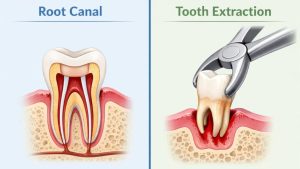
Root Canal vs. Extraction: Key Differences
Understanding tooth extraction vs root canal treatment helps patients compare outcomes clearly.
Root Canal vs. Extraction Comparison Table
| Factor | Root Canal Treatment | Tooth Extraction |
| Goal | Save the natural tooth | Remove the damaged tooth |
| Pain Relief | Eliminates infection and tooth pain | Removes the source of pain |
| Recovery Time | Minimal downtime | Longer recovery time for tooth extraction |
| Long-Term Impact | Preserves tooth & jawbone | May require tooth replacement |
| Cost Consideration | Higher upfront, lower long-term | Lower upfront, higher long-term |
| Success Rate | High root canal success rates | Depends on healing and replacement |
Pain & Comfort
- Root canal: Minimal discomfort, especially compared to untreated tooth pain
- Tooth extraction: Short-term soreness during healing
Recovery Time
- Root canal: Little to no downtime
- Recovery time for tooth extraction: Typically several days, depending on complexity
Long-Term Impact
- Root canal: Preserves natural tooth structure
- Extraction: May lead to bone loss without tooth replacement
Cost Considerations
The cost of root canal vs extraction varies. While extraction may cost less upfront, replacement options often increase total expenses over time.
Root Canal vs Filling: What’s the Difference?
The comparison between a root canal and a filling depends on the extent of damage. Surface-level damage can be treated with a filling. If the tooth pulp is infected, that damage is considered a higher level of severity, and a root canal will be necessary. If the decay has reached the nerve, then a filling will not be sufficient.
Which Dental Option Is Right for You?
Dentists evaluate several factors before recommending treatment:
- Severity of infection
- Location of the tooth
- Bone and gum health
- Long-term functionality
In many cases, saving the tooth through root canal treatment benefits outweigh extraction, but every case is unique.
Pros and Cons of Root Canal Treatment
Pros
- Preserves natural teeth
- Prevents tooth shifting
- High root canal success rates
- Long-lasting teeth restoration
Cons
- Requires follow-up restoration (crown)
- Slightly higher upfront cost
Pros and Cons of Tooth Extraction
Pros
- Completely removes infection
- It may be faster in severe cases
Risks of Tooth Extraction
- Bone loss over time
- Need for tooth replacement
- Changes in bite alignment
Tooth Extraction Aftercare
Proper tooth extraction aftercare supports healing and prevents complications.
Aftercare Tips
- Avoid straws and rinsing for 24 hours
- Eat soft foods
- Keep the area clean
- Follow the dentist’s instructions carefully
The tooth extraction recovery time depends on the complexity of the extraction and your overall health.

What Happens After a Tooth Is Extracted?
After extraction, tooth replacement is often recommended to maintain function and aesthetics. Options include:
Replacing missing teeth helps preserve jawbone health and prevents shifting.
Root Canal Recovery: What to Expect
Recovery after a root canal is typically quick. Mild sensitivity may occur for a few days, but most patients return to normal activities almost immediately. With proper care, root canal success rates remain very high.
Conclusion: Choosing the Right Dental Care for Your Smile
When it comes to root canal vs extraction, the best choice is the one that protects your long-term oral health. Addressing tooth pain early gives you more dental options and better outcomes.
At My Tooth Docs, our experienced dental team takes the time to evaluate your condition thoroughly and explain all your dental options, from root canal treatment to tooth extraction and replacement.
If you’re experiencing tooth pain or deciding between a root canal and extraction, schedule a consultation with My Tooth Docs today. The right diagnosis can save your tooth and your smile.
Frequently Asked Questions
1. Is it better to get a root canal or have the tooth removed?
Most of the time, a root canal is better. Removing a tooth compromises the long-term stability and function of your mouth.
2. How long does it take to recover from having a tooth removed?
Most simple tooth extractions take only a few days to heal, but complicated extractions can take weeks or more.
3. What can be done if a root canal doesn’t work?
Tooth removal is an option afterward, and you will need a replacement
4. Is a root canal something to dread?
Most patients can have pain-free root canals, and pain can actually be a reason to get a root canal.