
Dental Bridges in Naperville, IL
Fixed, natural-looking replacement for one or several missing teeth — anchored securely so you chew, speak, and smile without a second thought. Four bridge types, one honest recommendation.
★★★★★ Rated 5.0 on Google by 1,100+ Naperville patients
5.0★ on Google
1,100+ Naperville patient reviews
Fixed in Place
Anchored in — no slipping
4 Bridge Types
Traditional to implant-supported
On Route 59
11258 IL Rte 59 · Naperville
What Is a Dental Bridge?
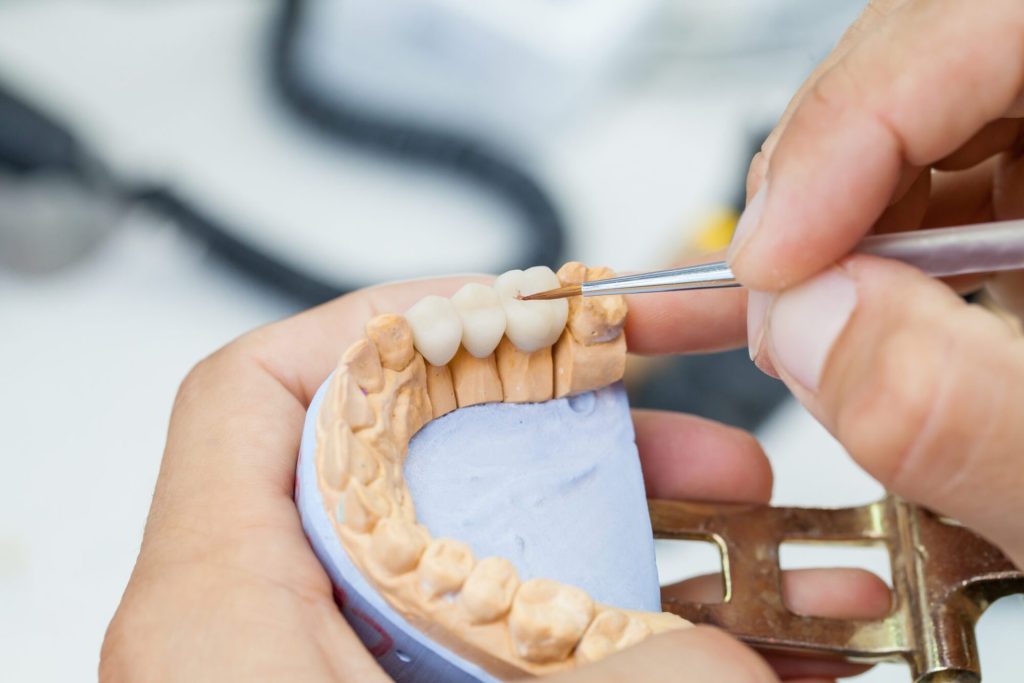
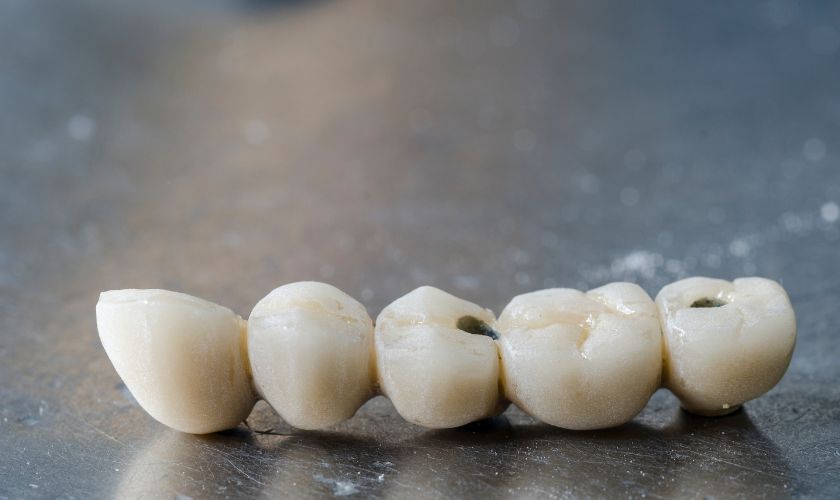
A dental bridge does what the name says: it bridges the gap left by missing teeth. Custom artificial teeth are anchored to the healthy teeth (or implants) on either side of the space — fixed in place, not removable like a partial denture.
Filling the gap matters for more than looks. Neighboring teeth drift into open spaces, the opposing tooth over-erupts, your bite shifts, and chewing moves to one side. A bridge stops that cascade early — which is why it remains one of dentistry’s most trusted replacements.
- Replaces one tooth or several in a row
- Fixed in place — chew and speak naturally
- Stops neighboring teeth from drifting into the gap
- Custom-shaded to blend with your natural smile
Four Kinds of Bridges — One Right Fit
Which bridge suits you depends on where the gap is, what’s next to it, and your long-term goals. Your exam gives you a straight answer.
Traditional Bridges
The classic: crowns on the two neighboring teeth support the replacement tooth between them. Proven, strong, and predictable.
Best if: healthy teeth flank the gap.
Implant-Supported Bridges
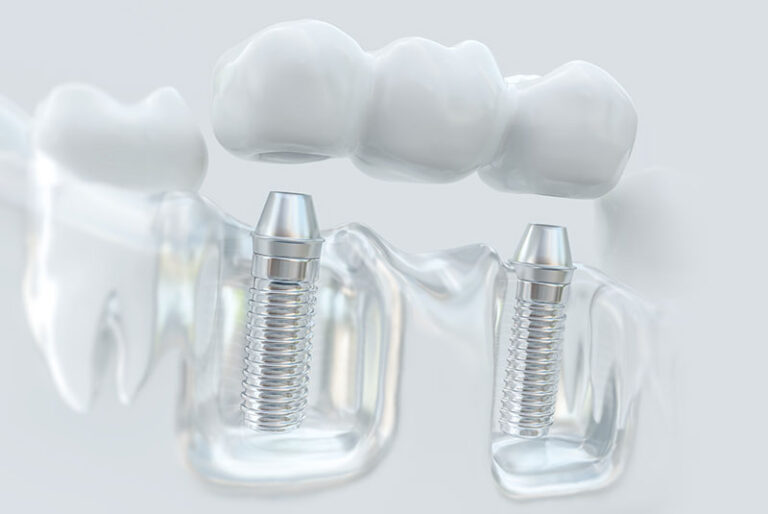
Implants anchor the bridge instead of natural teeth — no grinding down healthy neighbors, plus jawbone preservation. The modern gold standard for multiple missing teeth.
Best if: several teeth in a row are missing.
Cantilever & Maryland Bridges
Conservative designs for specific situations — support from one side only, or bonded wings behind front teeth with minimal preparation.
Best if: the gap suits a lighter-touch solution.
Why Close the Gap at All?
A missing tooth is never just a cosmetic problem — mouths reorganize around empty space. Neighboring teeth tilt and drift, the opposing tooth grows into the gap, food traps form, and your bite quietly shifts until jaw soreness or uneven wear shows up years later.
Patients who replace a missing tooth promptly keep their options simple and their costs lower. Patients who wait often need orthodontics or surgery just to make room for the replacement they could have had easily. If you’ve already waited years — don’t worry, options remain; they just need mapping.
- Prevents drifting, tilting & bite collapse
- Restores even chewing on both sides
- Earlier replacement = simpler, cheaper options
Bridge or Implant? The Honest Comparison
For a single missing tooth, a dental implant preserves jawbone and leaves neighbors untouched — usually the strongest long-term choice. But bridges win on speed (weeks, not months), avoid surgery entirely, and cost less up front. When neighboring teeth already need crowns anyway, a bridge elegantly solves two problems at once.
We lay out both options with real numbers and timelines — then you decide. No steering, no one-size-fits-all answers.
- Bridges: faster, no surgery, lower upfront cost
- Implants: bone preservation & neighbors untouched
- Both compared honestly at your consultation
Bridge vs. Implant vs. Partial Denture
| Dental Bridge | Dental Implant | Partial Denture | |
|---|---|---|---|
| Fixed or removable | Fixed | Fixed | Removable |
| Surgery needed | ✗ No | ✓ Minor | ✗ No |
| Timeline | 2–3 weeks | 3–6 months | 2–4 weeks |
| Preserves jawbone | ✗ | ✓✓ | ✗ |
| Neighboring teeth | Crowned for support | Untouched | Clasped, not ground |
| Typical lifespan | 10–15 years | Decades | 5–8 years |
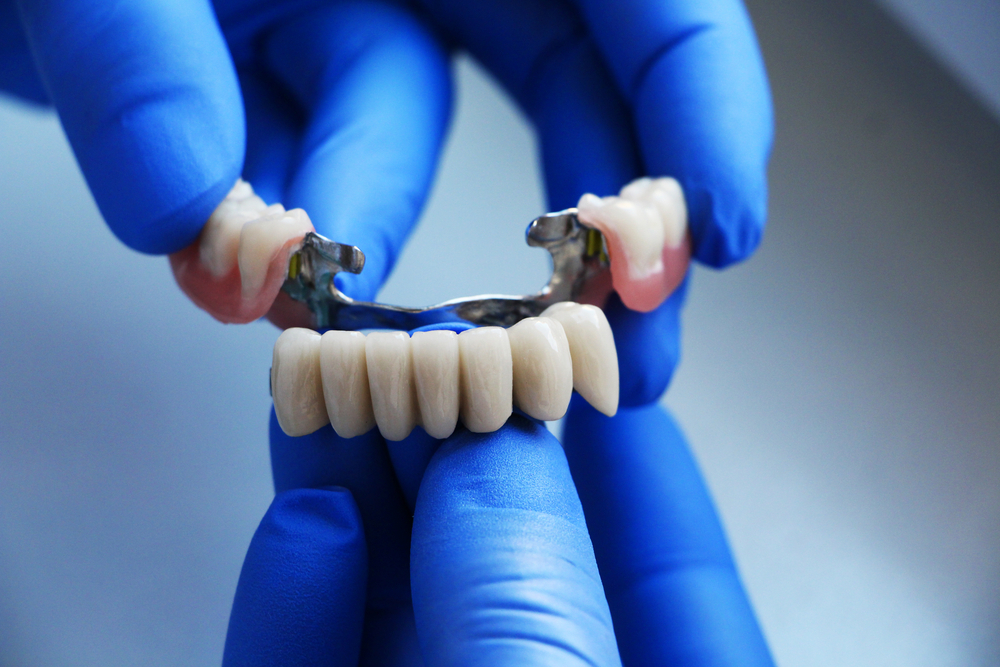
Weighing the fixed options? Read more on dental implants or removable partial dentures — or just ask us to compare all three for your case.
What a Bridge Restores
Chew on Both Sides Again
Even, comfortable chewing — no more favoring one side of your mouth.
A Complete Smile
The gap disappears behind custom-shaded teeth that match your own.
Clear Speech
Front-tooth gaps whistle and slur; a bridge ends both.
Protects Your Bite
Neighboring and opposing teeth stay where they belong.
Never Comes Out
Fixed in place — no nightly removal, no adhesives, no slipping.
10–15 Year Track Record
A proven restoration with decades of dental history behind it.
Is a Bridge Right for You?
A bridge is likely a great fit if:
- You’re missing one tooth or a few in a row
- The teeth beside the gap are healthy — or already need crowns
- You want a fixed solution without implant surgery
- You want your smile back in weeks, not months
- A removable partial never appealed to you
Good candidates need healthy anchor teeth and gums — decay or gum disease gets treated first so your bridge stands on solid ground. If the anchor teeth aren’t strong enough, an implant-supported bridge sidesteps the problem entirely. Your exam sorts all of it in one visit.
Missing a Tooth for Years Already?
You still have options — drifting and bone changes just need to be mapped first. A quick exam and X-ray show exactly what’s shifted and which replacements still fit your mouth as it is today. The sooner we look, the more choices stay open.
Your Bridge, Step by Step
Consultation & X-Rays
We examine the gap, the neighboring teeth, and your bite — then walk you through bridge types (and the implant alternative) with honest pricing.
Anchor Preparation
Under local anesthesia, the anchor teeth are shaped for their crowns and precise impressions are taken.
Temporary Bridge
You wear a protective temporary — no visible gap — while the lab custom-crafts your bridge to shade and bite.
Fitting & Bonding
We verify fit, contacts, bite, and shade, adjust until it’s right, then bond your bridge permanently.
Simple Maintenance
Brush normally, clean under the bridge with floss threaders or a water flosser, and keep regular check-ups.
What Do Dental Bridges Cost in Naperville?
Nationally, a traditional three-unit bridge (two anchor crowns plus the replacement tooth) typically runs about $2,000 to $5,000; implant-supported bridges cost more — reference ranges, not quotes. Your exact price is confirmed in writing at your consultation. What shapes it:
- How many teeth the bridge replaces
- Bridge type — traditional, cantilever, Maryland, or implant-supported
- Material quality and lab craftsmanship
- Imaging, temporary bridge & adjustments — included
Insurance: bridges are standard restorative treatment, and most plans cover a meaningful share — commonly around 50% after deductibles. We verify your benefits up front, bill insurance directly, and offer financing for the balance.
Monthly Payments That Fit Your Budget
Split your treatment into predictable monthly payments through Cherry financing — a quick application with an instant decision. Most patients are surprised how affordable a fixed new smile can be month to month.
Advanced Technology, Gentle Care
Digital Impressions
Digital X-Rays
Custom Shade Matching
Implant Option In-House
Meet the Doctors Behind Your New Smile
Your bridge is planned and placed start-to-finish by our own Doctors of Dental Medicine — Dr. Nader, Dr. Bara, and Dr. Sami — at our Naperville office on Route 59. One team, from first X-ray to final bite check.

Dr. Nader Abu-Seraj, DMD
Hospital-trained in oral surgery — restoring full-arch smiles across Chicagoland since 2014.
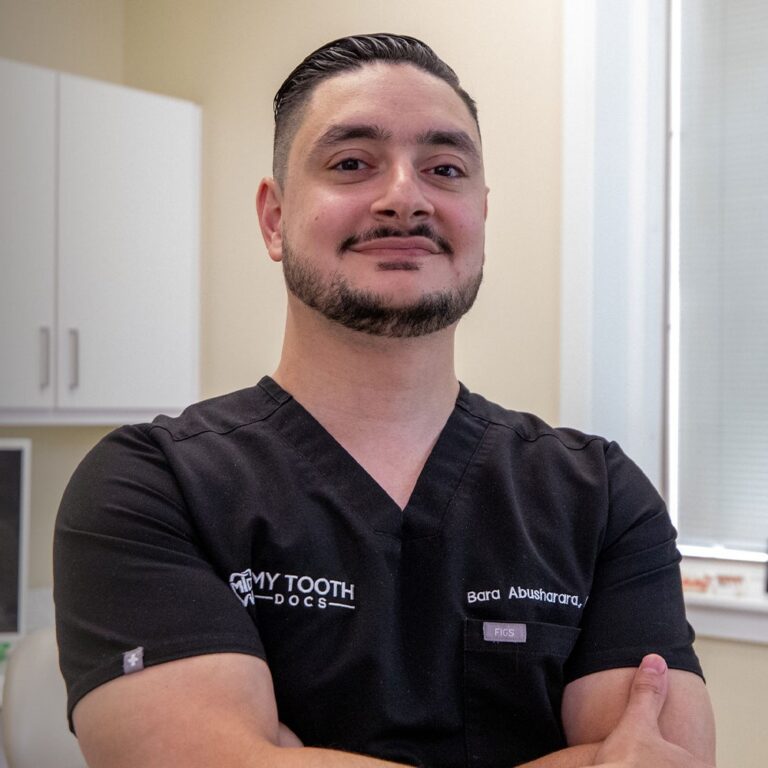
Dr. Bara Abusharara, DMD
Focused on comfortable, personalized implant and restorative dentistry.

Dr. Sami Abdelrahim, DMD
Helping patients rebuild confident, healthy smiles they’re proud to share.
Why Patients Choose My Tooth Docs
- Advanced 3D imaging & guided implant technology
- Sedation options for a calm, comfortable visit
- Transparent pricing & flexible monthly financing
- One team for surgery, temporaries & final teeth
- Evening & Saturday appointments available
Rated 5.0 on Google
1,100+ Naperville patients trust My Tooth Docs with their smiles — read their stories.
Rated 5.0★ on Google by Naperville Patients
See what patients across Naperville and the western suburbs say about their restored smiles — bridges, implants, and everything between.
Visit Us in Naperville
Our Route 59 office proudly serves Naperville, Aurora, Plainfield, Bolingbrook, Oswego, and the surrounding western suburbs. Same doctors at every visit — from your first appointment to your final smile.
In the south suburbs? Visit our South Holland dental bridges office.
Dental Bridges in Naperville — FAQ
Nationally, a traditional three-unit bridge typically runs $2,000–$5,000, with implant-supported bridges costing more (reference ranges, not quotes). You get exact written pricing at your consultation, insurance usually contributes, and Cherry financing spreads the balance monthly.
Usually yes, in part — bridges are standard restorative care, and most plans cover a meaningful share after deductibles. We verify your specific benefits before you commit and bill insurance directly.
Typically two to three visits over a few weeks: preparation and impressions first (you leave with a temporary), then fitting and bonding once your custom bridge is crafted. It’s one of the fastest fixed tooth replacements available.
Commonly 10–15 years, often longer with good care. The usual point of failure isn’t the bridge itself but decay at the anchor teeth — which daily cleaning and regular check-ups prevent.
No — preparation happens under local anesthesia, and most patients compare it to a crown visit. Mild sensitivity for a few days afterward is normal, and sedation options are available for anxious patients.
For a single missing tooth, an implant preserves bone and spares the neighboring teeth — often the best long-term call. A bridge wins on speed, avoids surgery, and makes extra sense when the neighbors already need crowns. We’ll compare both honestly with real numbers.
Traditional (crowns on both neighbors), cantilever (support from one side), Maryland (bonded wings, minimal prep), and implant-supported (anchored to implants, sparing natural teeth). Your exam determines which fits your gap.
Yes — bridges commonly replace two to four teeth in a row. The longer the span, the more anchor support matters, which is where implant-supported bridges usually become the smarter choice.
Yes. Your bridge is custom-shaded and shaped to match neighboring teeth — done well, nobody can tell where your teeth end and the bridge begins.
The replacement tooth sits on your gums, so floss threaders, super floss, or a water flosser clean beneath it in seconds. We’ll show you exactly how at placement — it quickly becomes routine.
Teeth drift into open spaces: neighbors tilt, the opposing tooth over-erupts, your bite shifts, and food traps form. Replacing a tooth early keeps the fix simple; waiting tends to add orthodontics or surgery to the bill.
Absolutely. Bridges wear out after a decade or two, and replacement — or an upgrade to an implant-supported version — is routine. If your old bridge feels loose or traps food, have it looked at soon.