
Dental Crowns in Naperville, IL
Custom porcelain and zirconia crowns that restore cracked, worn, or root-canaled teeth to full strength — shaped and shaded so naturally nobody spots the difference.
★★★★★ Rated 5.0 on Google by 1,100+ Naperville patients
5.0★ on Google
1,100+ Naperville patient reviews
Saves Weak Teeth
Strength plus natural looks
Premium Ceramics
Porcelain & zirconia, tooth-matched
On Route 59
11258 IL Rte 59 · Naperville
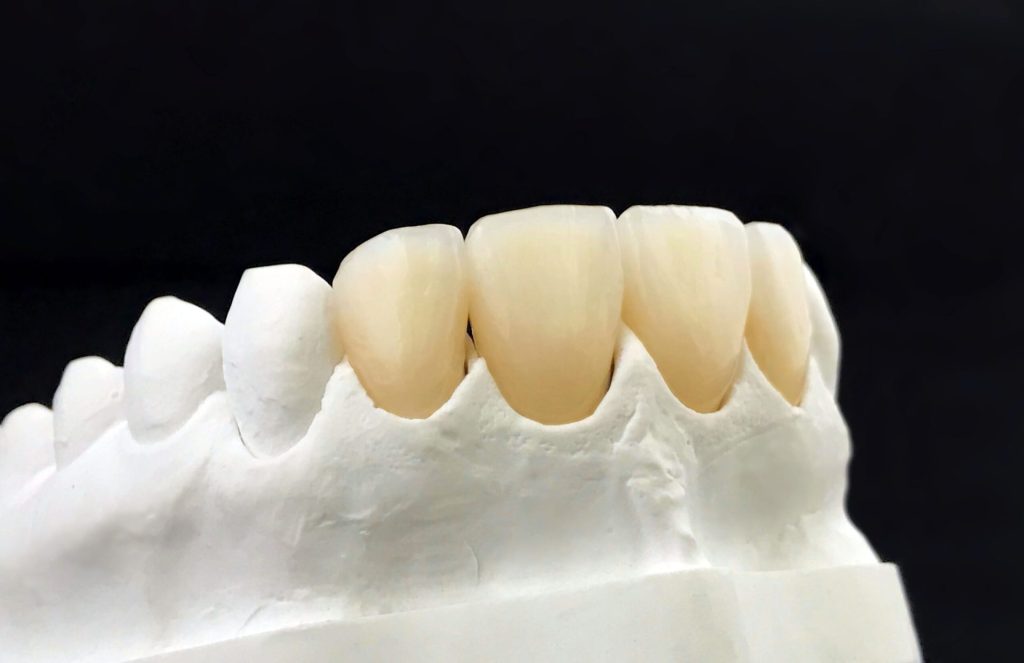
What Is a Dental Crown?
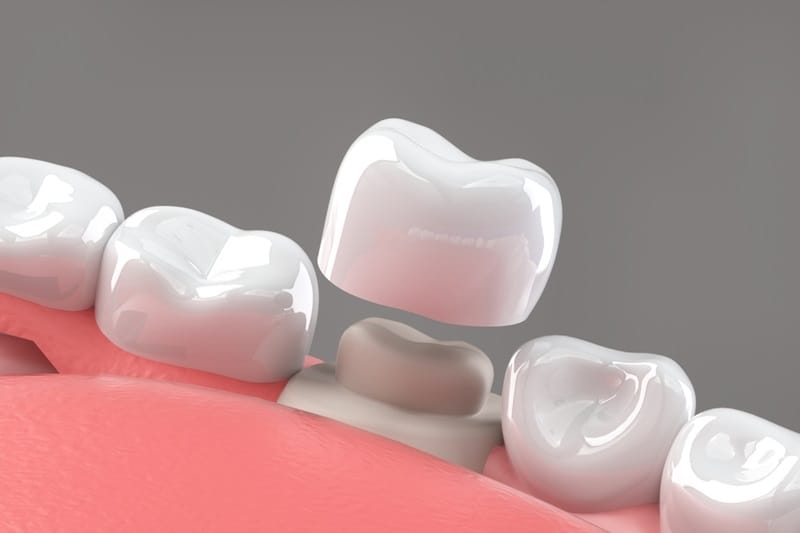
A crown (you may have heard “cap”) is a custom-made restoration that covers a damaged tooth completely — restoring its original shape, size, strength, and appearance. Where a filling patches part of a tooth, a crown armors the whole thing.
Modern crowns are crafted from porcelain, zirconia, and ceramic blends that match the translucency of natural enamel, so a crowned tooth doesn’t announce itself. Done well, a crown is how a cracked, worn, or root-canaled tooth gets another decade or two of normal life.
- Covers and protects the entire visible tooth
- Restores full chewing strength
- Shade-matched porcelain or zirconia — no gray “fake tooth” look
- Typically lasts 10–15+ years with good care
The Right Crown for the Right Tooth
Front teeth need beauty; molars need brute strength. We match the material and design to the job each tooth actually does.
Porcelain & Ceramic Crowns
The aesthetic choice for front teeth — translucency and shading that mimic natural enamel in any light.
Best if: the tooth shows when you smile.
Zirconia Crowns
Exceptionally strong modern ceramic that shrugs off chewing forces — increasingly the go-to for molars and grinders, with looks that keep improving every year.
Best if: the tooth does heavy chewing work.
Implant Crowns
The visible tooth on top of a dental implant — replacing a missing tooth entirely, root to crown.
Best if: the tooth is gone and you want it back.
When a Crown Is the Right Call
Crowns solve a specific set of problems: a cracked or fractured tooth that a filling can’t hold together, a tooth hollowed out by a large old filling, a tooth freshly protected by root canal therapy, a severely worn or misshapen tooth — or a missing tooth restored with an implant.
The common thread is structural: when enough natural tooth is compromised, patching stops working and armor starts making sense. Waiting usually costs more — cracks spread, and a crownable tooth can become an extraction.
- Cracked, fractured, or badly worn teeth
- Teeth weakened by large fillings
- After root canal therapy — especially molars
Precision-Fit, Comfort-First Process
A great crown lives or dies on fit. We prepare the tooth conservatively under local anesthesia, capture precise digital or physical impressions, and fit you with a temporary crown while your permanent one is custom-fabricated to match your bite and shade.
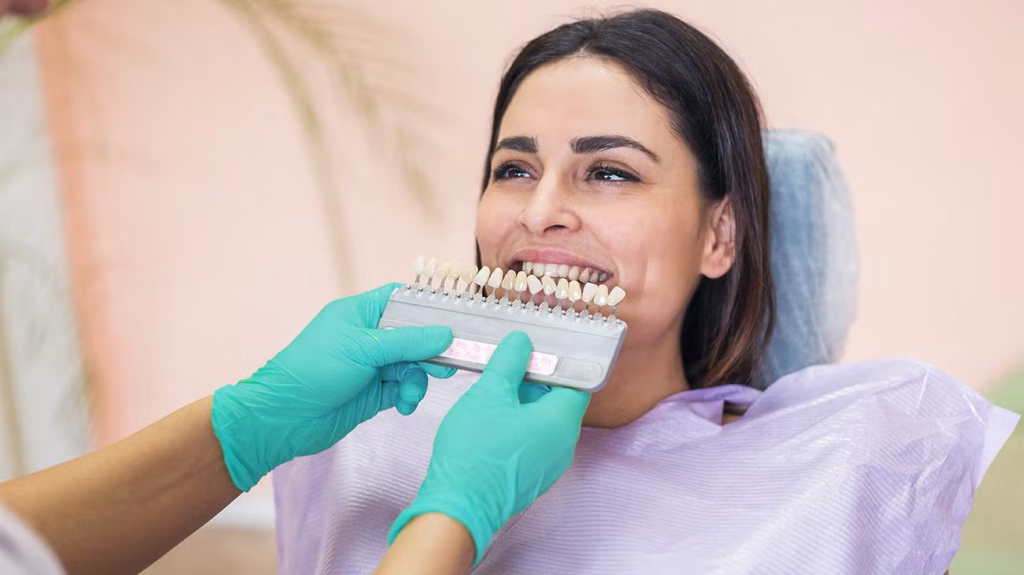
At placement we check the contact points, your bite, and the shade in natural light before bonding it permanently. Anxious about dental work? Sedation options make crown visits genuinely easy.
- Conservative preparation under local anesthesia
- Temporary crown protects the tooth between visits
- Bite, contacts & shade verified before final bonding

Crown vs. Filling vs. Veneer — What Does Your Tooth Need?
| Filling | Veneer | Crown | |
|---|---|---|---|
| Covers | The cavity only | Front surface | The entire tooth |
| Solves | Small-to-moderate decay | Cosmetic flaws | Structural damage |
| Strength added | Modest | Modest | Full chewing strength |
| Best for | Early decay | Healthy but unsightly teeth | Cracked, worn, root-canaled teeth |
| Typical lifespan | 5–10 years | 10–15+ years | 10–15+ years |
| National cost range* | $150–$450 | $900–$2,500 | $1,000–$2,500 |
*National reference ranges, not quotes. Missing the tooth entirely? A crown on a dental implant replaces it root to crown.
What a Well-Made Crown Gives You
Chew Without Thinking
Steak, apples, crusty bread — full strength returns to the tooth.
Invisible Repair
Shade-matched porcelain blends in; nobody spots the crowned tooth.
Stops Cracks Cold
Fractures can’t spread through a tooth that’s fully covered.
Saves the Tooth
A well-timed crown is often what stands between a tooth and extraction.
A Decade-Plus Fix
10–15+ years of service from one well-made restoration.
Protects Root Canal Work
Seals and reinforces treated teeth so the repair holds.
Do You Need a Crown?
A crown is likely the answer if:
- A tooth cracked, chipped badly, or fractured
- An old large filling keeps breaking or leaking
- You just had (or need) a root canal on a molar
- One tooth is visibly worn down or misshapen
- Your dentist has been “watching” a weak tooth for years
Sharp pain when biting, a tooth that’s suddenly temperature-sensitive, or a filling that feels loose are all early warnings. An exam and X-ray settle it quickly — and when a smaller repair will genuinely do the job, that’s what we’ll recommend.
Cracked Tooth? Don’t Wait It Out.
Cracks only travel one direction: deeper. A tooth that’s crownable today can need a root canal next month and an extraction by summer. If something cracked — even painlessly — a quick exam now usually means a simpler, cheaper fix.
Your Crown, Step by Step
Exam & Imaging
Digital X-rays confirm whether a crown is the right fix — or whether something simpler will genuinely do.
Gentle Preparation
Under local anesthesia, the tooth is shaped to receive its crown and precise impressions are captured.
Temporary Crown
You leave with a protective temporary — normal eating, no visible gap — while your permanent crown is custom-made.
Precision Placement
Fit, contacts, bite, and shade are checked and adjusted, then the crown is permanently bonded.
Long-Term Care
Brush, floss, and keep check-ups. We inspect your crown at every visit so it quietly lasts a decade or more.
What Do Dental Crowns Cost in Naperville?
Nationally, a crown typically runs about $1,000 to $2,500 depending on material and complexity — a reference range, not a quote. Your exact price is confirmed in writing before treatment starts. What shapes it:
- Material — porcelain, zirconia, or ceramic blends
- The tooth’s location and how it bites
- Any groundwork (root canal, core build-up) the tooth needs
- Imaging, temporary crown & adjustments — included
Insurance: good news — crowns that restore damaged teeth are usually covered in part, commonly around 50% after deductibles. We verify your benefits before you commit, bill insurance directly, and offer financing for the remainder.
Monthly Payments That Fit Your Budget
Split your treatment into predictable monthly payments through Cherry financing — a quick application with an instant decision. Most patients are surprised how affordable a fixed new smile can be month to month.
Advanced Technology, Gentle Care
Digital Impressions
Digital X-Rays
Natural-Light Shade Match
Quality Lab Craftsmanship
Meet the Doctors Behind Your New Smile
Your crown is planned, prepared, and placed by our own Doctors of Dental Medicine — Dr. Nader, Dr. Bara, and Dr. Sami — at our Naperville office on Route 59. The doctor who preps your tooth is the one who seats the final crown.
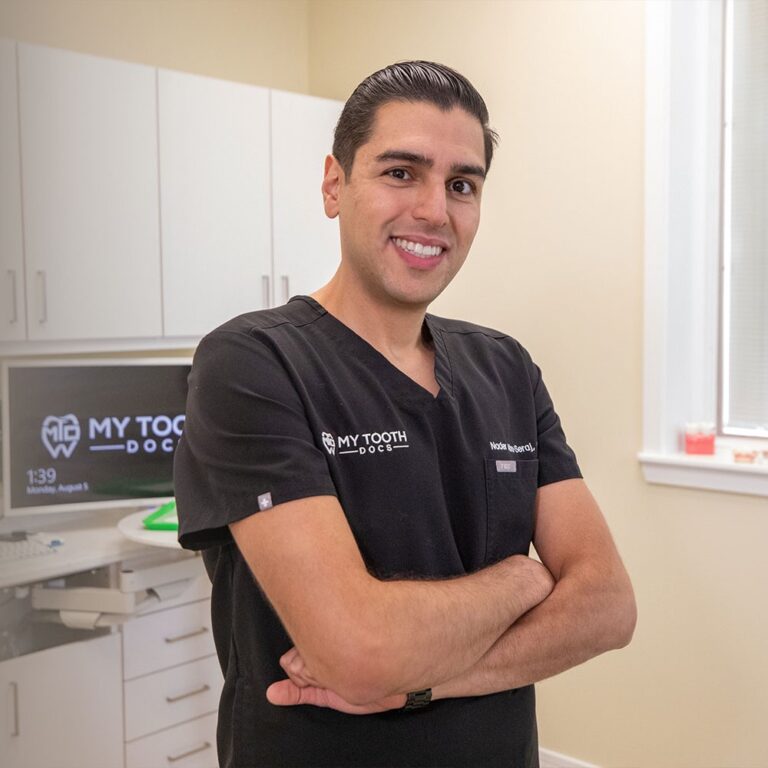
Dr. Nader Abu-Seraj, DMD
Hospital-trained in oral surgery — restoring full-arch smiles across Chicagoland since 2014.
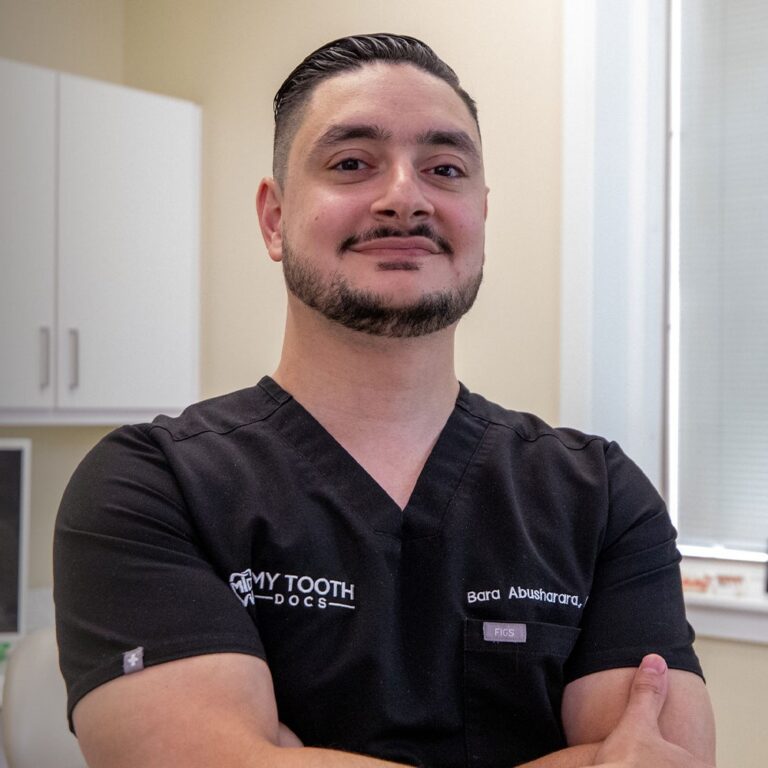
Dr. Bara Abusharara, DMD
Focused on comfortable, personalized implant and restorative dentistry.
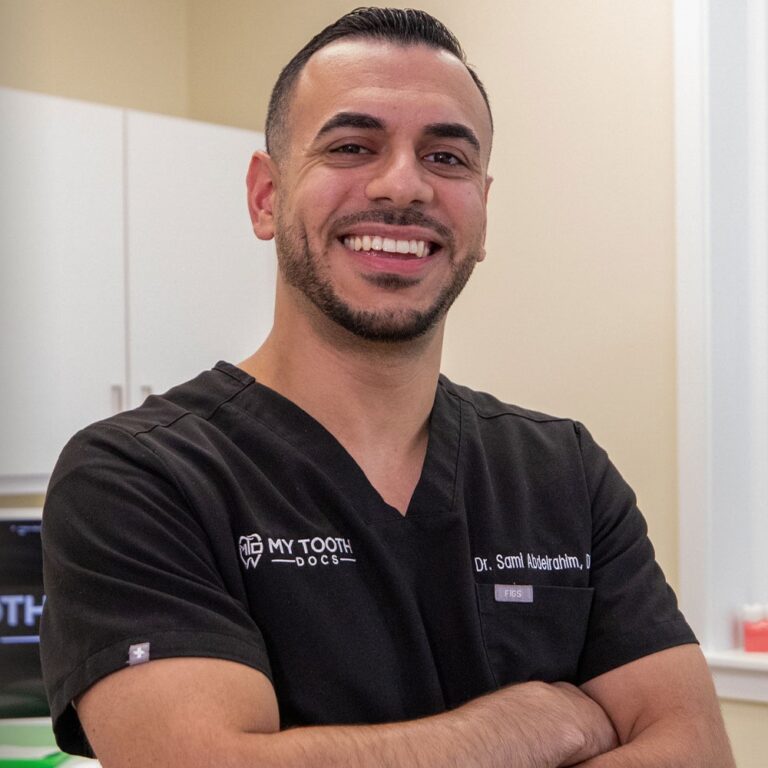
Dr. Sami Abdelrahim, DMD
Helping patients rebuild confident, healthy smiles they’re proud to share.
Why Patients Choose My Tooth Docs
- Advanced 3D imaging & guided implant technology
- Sedation options for a calm, comfortable visit
- Transparent pricing & flexible monthly financing
- One team for surgery, temporaries & final teeth
- Evening & Saturday appointments available
Rated 5.0 on Google
1,100+ Naperville patients trust My Tooth Docs with their smiles — read their stories.
Rated 5.0★ on Google by Naperville Patients
See what patients across Naperville and the western suburbs say about their care — including crowns that saved teeth they thought were goners.
Visit Us in Naperville
Our Route 59 office proudly serves Naperville, Aurora, Plainfield, Bolingbrook, Oswego, and the surrounding western suburbs. Same doctors at every visit — from your first appointment to your final smile.
In the south suburbs? Visit our South Holland dental crowns office.
Dental Crowns in Naperville — FAQ
Nationally, crowns typically range from about $1,000 to $2,500 depending on material and complexity (a reference range, not a quote). You’ll get exact written pricing at your exam, insurance often covers a meaningful share, and Cherry financing handles the rest monthly.
Usually yes, in part — crowns that restore damaged teeth are standard covered treatment on most plans, commonly around 50% after deductibles. We verify your specific benefits before you commit to anything.
Porcelain and ceramic for front teeth where translucency matters most, zirconia where chewing forces are heaviest, and blended options in between. We recommend material tooth-by-tooth based on the job it has to do.
Yes — modern crowns are shade-matched to neighboring teeth in natural light and shaped to your bite. A well-made crown is effectively invisible; even you may forget which tooth it is.
No — preparation happens under local anesthesia, and most patients compare it to getting a filling. Mild sensitivity for a few days afterward is normal, and sedation options exist if you’re anxious.
Typically two: one to prepare the tooth and take impressions (you leave with a temporary), and one to fit and bond the permanent crown once it’s custom-fabricated.
For molars and premolars, almost always — root-canaled teeth become brittle, and a crown is what prevents the fracture that would cost you the tooth. Front teeth sometimes get by without one; your dentist will tell you honestly.
It’s about how much healthy tooth remains. Small-to-moderate decay takes a filling; cracks, fractures, and teeth hollowed by large old fillings need full coverage. An exam and X-ray settle it in minutes.
Typically 10–15 years, often longer. Lifespan mostly tracks your habits: daily brushing and flossing, no ice-chewing, and regular check-ups where we can catch small issues early.
The crown itself can’t decay, but the tooth at the gumline underneath can. That margin is exactly where brushing, flossing, and hygiene visits earn their keep.
Keep the crown, avoid chewing on that side, and call us promptly — re-cementing is often quick if you come in soon. A lost crown left untreated invites decay and shifting.
Not alone — a crown needs a tooth or an implant to sit on. For a missing tooth, a crown on a dental implant replaces it completely, or a bridge can span the gap using neighboring teeth.