
Invisalign in Naperville: Cost, Timeline & What to Expect

Invisalign cost guide: patient placing a clear aligner over his upper teeth

Thinking about clear aligners? Most people start with the same two questions: what is the Invisalign cost, and is it worth it? The honest answer is that it depends on your teeth, your goals, and your insurance.

In this guide, we explain what Invisalign typically costs in 2026, what changes the price, how insurance and payment plans work, how long treatment takes, and what each step feels like. At My Tooth Docs in Naperville and South Holland, we walk you through all of it at your consultation, so you can plan with no surprises.

How Much Does Invisalign Cost in 2026?

In 2026, Invisalign treatment in the U.S. typically costs about $3,500 to $8,000, the same range we use in our Invisalign vs braces cost guide. Think of that as the average cost of Invisalign expressed as a range, not as a quote.

According to Invisalign, the cost of treatment is comparable to braces in most cases, and your dentist sets the fee based on how complex your case is and how many aligners you need. That is why two friends can get very different numbers.

At My Tooth Docs, the cost of Invisalign is comparable to traditional braces, and our pricing is transparent, with no hidden fees. During your consultation, we give you a personalized treatment plan and a clear breakdown of your investment, so you can decide with confidence.

Invisalign Cost at a Glance

ItemTypical figureGood to know
Total fee (U.S., 2026)$3,500–$8,000Set by your case
Compared with bracesComparableIn most cases
Average ortho insurance benefit$1,7722021 OrthoFi data
Treatment time6–18 monthsMost cases at our offices
Daily wear20–22 hoursNew set every 1–2 weeks

When you compare quotes, ask what each one includes. The American Association of Orthodontists notes that some practices offer all-inclusive pricing that covers treatment, all appointments, and retainers after treatment, while others bill some of those separately.

7 Factors That Affect the Cost of Invisalign

Two people can both need Invisalign and still get very different quotes. These seven things explain most of the difference:

  • How much your teeth need to move. A minor fix for slight crowding or spacing takes fewer aligners and less time than a complex correction.
  • Your bite. Overbites, underbites, and crossbites often need longer, more detailed treatment, which can raise the fee.
  • The number of aligners. Each stage of movement is a new set, so a longer plan means more aligners.
  • The type of plan. Align Technology offers shorter packages, such as Invisalign Express, for minor fixes and a comprehensive package for complex cases.
  • Refinements. Some patients need a few extra aligners near the end to fine-tune the result, so ask whether they are included.
  • Retainers. You will need retainers after treatment, and some practices include them in the fee while others charge separately.
  • Where you live. Fees vary by region, which is one reason a national average only goes so far.

One thing that won’t raise your fee here is our provider status. My Tooth Docs is a 2026 Invisalign Sapphire Provider, a tier Align Technology assigns based on case volume, but your fee is still set by the complexity and length of your case.

Invisalign Express Cost vs Full Treatment

Express-style plans use fewer aligners, so the Invisalign Express cost is usually lower than comprehensive treatment. The catch is that they only suit mild cases, such as a small gap or slight crowding.

If your teeth need more movement than a short plan allows, choosing the cheaper option can leave you with an unfinished result. Your 3D scan shows which plan actually fits your teeth.

Invisalign Retainer Cost After Treatment

Teeth naturally try to drift after treatment, so retainers are part of finishing any Invisalign plan. Many people wear them full-time for the first few months, then only at night.

The Invisalign retainer cost depends on the type you get and whether it is part of your treatment fee. Some offices include your first retainers, while others charge separately, so ask what is included and what a replacement set costs.

Invisalign Cost With Insurance

Many dental plans with orthodontic benefits cover Invisalign the same way they cover braces. Plans typically pay either a percentage of the treatment fee or a fixed benefit amount, so your share depends on both your fee and your plan.

For a sense of scale, Invisalign cites 2021 OrthoFi data on U.S. patients with dental insurance: the average orthodontic benefit was $1,772, and 92% qualified for up to $3,000. Coverage for adults varies by plan, and the American Association of Orthodontists suggests asking your insurer about any lifetime maximum or age limit on orthodontic coverage.

Invisalign’s own cost page walks through a hypothetical example: a $5,600 fee with $2,800 covered by insurance leaves $2,800, or about $233 a month over 12 months. Your numbers will differ, but the math works the same way.

At My Tooth Docs, we offer insurance assistance. Our team can help you check your benefits before you start, so you know what your plan covers and what your share will be.

Invisalign Cost Without Insurance

Without orthodontic coverage, you pay the full fee, which typically falls in that $3,500 to $8,000 range. That can feel like a lot at once, but two tools make it easier to manage.

Using an HSA or FSA

IRS Publication 502 lists braces among the dental treatments that count as medical care. The American Association of Orthodontists also notes that health savings accounts and flexible spending accounts let you use pre-tax dollars for eligible expenses, including orthodontic treatment.

Check with your plan administrator to confirm that clear aligners qualify under your plan. If you use an FSA, watch the deadline, because FSAs typically follow a use-it-or-lose-it rule.

Monthly Payments With Cherry Financing

We offer flexible monthly payment options, including Cherry financing. Cherry’s application takes about 60 seconds, there is no hard credit check, and approvals go up to $50,000.

Cherry offers 0% APR options and interest-bearing plans with APRs as low as 5.99%, and your exact terms depend on your credit and eligibility. There are no prepayment penalties, so you can pay off your balance early.

Curious what Invisalign would involve for your smile?

How Long Does Invisalign Take?

Most Invisalign treatments at My Tooth Docs take 6 to 18 months, and mild cases can finish in as little as six months. Time and cost are linked, because a longer plan usually means more aligners.

  • Wear time: Aligners need to be worn 20–22 hours a day, and leaving them out slows progress.
  • Aligner changes: You’ll usually switch to a new set every week or two.
  • Check-ins: Short, regular visits let us confirm your teeth are moving as planned.

For a side-by-side look at speed and comfort, read our guide to Invisalign vs braces.

What to Expect, Step by Step

1. Free Consultation and 3D Scan

Your Invisalign journey starts with a free consultation. We examine your teeth and bite, then take a digital scan with our iTero scanner, with no goopy impression material.

The scan creates a 3D model of your teeth, and you can see a preview of your projected result before you commit to anything.

2. Your Custom Treatment Plan and Fee

Your dentist maps out how your teeth will move, stage by stage. This is when you get your treatment fee, estimated timeline, and payment options.

3. Your First Aligners

At this visit, we make sure your aligners fit well and show you how to use them. Some plans also include attachments, small tooth-colored shapes bonded to certain teeth that help the aligners grip and guide them.

4. The First Few Days

Expect some pressure or tenderness for the first two or three days with each new set. That pressure is a sign your teeth are moving, and it usually fades quickly.

5. Daily Life, Check-Ins, and Retainers

Take your aligners out only to eat, to drink anything other than water, and to brush and floss, then put them straight back in. A small travel kit with a case, toothbrush, and floss makes busy days around Naperville easier.

You’ll check in with us regularly along the way. When your teeth reach their final position, you move on to retainers to keep your new smile in place.

Is Invisalign Worth the Cost?

For many teens and adults, yes. Invisalign straightens teeth discreetly, and you can take the aligners out for meals and for brushing and flossing.

Patient checking her smile in a hand mirror with her dentist

That said, aligners only work if you wear them 20–22 hours a day. If you know that will be hard, braces may be a better fit, and we will tell you so at your consultation.

Who Is a Good Candidate for Invisalign?

Invisalign is designed for teens and adults with mild to moderate orthodontic concerns, such as:

  • Crowded teeth
  • Gaps between teeth
  • An overbite, underbite, or crossbite
  • Teeth that shifted after earlier braces

Severe problems caused by the position of the jaw may need braces, surgery, or a combination. To see where your case fits, read what Invisalign can fix.

Questions to Ask Before You Commit

A quote is easier to compare when you know what to ask. Bring these questions to any Invisalign consultation, including ours:

  • What exactly does the fee include: the scan, aligners, check-ups, refinements, and retainers?
  • Is there an extra charge if I need refinement aligners near the end?
  • Are my first retainers included, and what does a replacement set cost?
  • Do I need any dental work, such as a filling or gum treatment, before I start?
  • What will my insurance pay, and is there a lifetime maximum or an age limit?
  • Does my plan have a waiting period, and does it pay its share all at once or in installments?
  • If I finance, what would my down payment and monthly payment be?

Frequently Asked Questions

How much does Invisalign cost on average?

In 2026, the average cost of Invisalign in the U.S. typically falls between about $3,500 and $8,000. Your own fee depends on how complex your case is, how many aligners you need, and how long treatment takes.

How much does Invisalign cost with insurance?

It depends on your plan’s orthodontic benefit. Many plans pay a percentage or a fixed amount, and Invisalign cites 2021 data showing an average orthodontic benefit of $1,772 for insured U.S. patients. Your share is your fee minus that benefit.

How much does Invisalign cost without insurance?

Without coverage, you pay the full fee, which typically falls in the $3,500 to $8,000 range nationally. HSA or FSA funds and monthly payment plans, such as Cherry financing, can make it easier to manage.

Does dental insurance cover Invisalign for adults?

Sometimes. Coverage for adults varies by plan, and some plans set an age limit on orthodontic benefits. Our team can help you check your benefits before you start.

Can I use my HSA or FSA for Invisalign?

Usually, yes. HSAs and FSAs can be used for eligible expenses, including orthodontic treatment, but confirm with your plan administrator and use FSA funds before your plan’s deadline.

Is Invisalign Express cheaper than full treatment?

Usually, because express-style plans use fewer aligners. They only suit minor cases, such as a small gap or slight crowding, and your 3D scan shows whether a short plan will work for your teeth.

How much does an Invisalign retainer cost?

It depends on the type of retainer and whether it is part of your treatment fee. Some practices include your first retainers, so ask what is covered and what replacements cost.

Is the Invisalign consultation free at My Tooth Docs?

Yes. Your Invisalign journey with us starts with a free consultation, where we examine your teeth and bite and confirm whether you are a good candidate.

Invisalign at Our Naperville and South Holland Offices

Both of our offices offer Invisalign for kids, teens, and adults, from Invisalign First for growing children to clear aligners for adults. Learn more about Invisalign in Naperville or Invisalign in South Holland.
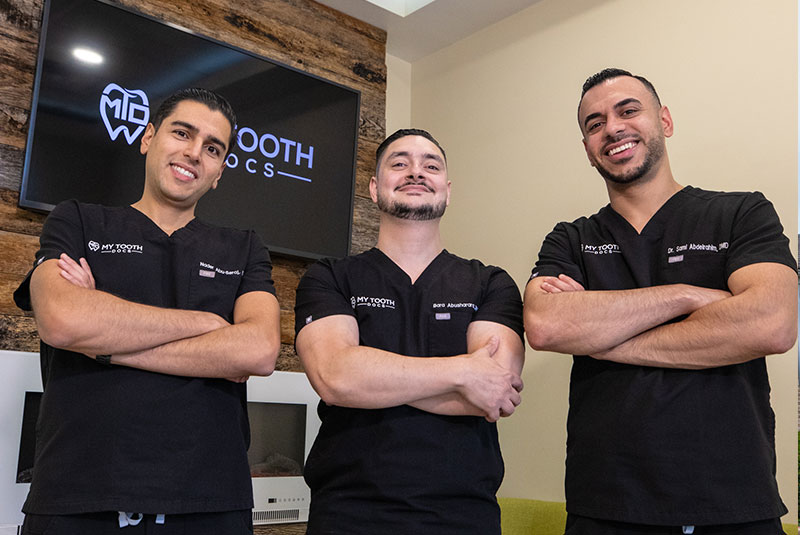
The My Tooth Docs dentists at the office

To get your own Invisalign cost estimate, call our Naperville office at (630) 690-1406 or our South Holland office at (708) 333-2909, or contact us online.


On this page

Book Your Visit

Have a question about this topic? Our team is happy to help.

or call Naperville (630) 690-1406
or South Holland (708) 333-2909

Related guides

Scroll to Top