
Missing teeth affect far more than your smile. They change how you chew, how you speak, and how confident you feel in photos and conversations. Dental implants are one of the most durable, natural-feeling ways to replace missing teeth — and the first question almost everyone asks is the same: how much do dental implants cost?
At My Tooth Docs, we believe in transparent pricing. This guide lays out realistic 2026 cost ranges for dental implants in Naperville — from a single tooth to a full-mouth restoration — plus what actually drives the price, what insurance covers, and how monthly financing works.
How Much Do Dental Implants Cost in Naperville? (Quick Answer)
In Naperville, IL, a complete single dental implant typically costs $3,000 to $6,500, including the implant post, abutment, and crown. Larger cases cost more because they involve more implants, more advanced materials, and more planning. Here is a quick look at typical 2026 ranges:
| Treatment | Typical Cost Range |
|---|---|
| Single tooth implant (post, abutment, and crown) | $3,000 – $6,500 |
| Implant-supported bridge | $5,000 – $15,000 |
| All-on-4 / full-arch implants (per arch) | $15,000 – $30,000+ |
| Full mouth dental implants (both arches) | $30,000 – $60,000+ |
These are estimate ranges, not quotes. Your exact cost depends on your jawbone, how many teeth you are replacing, and the materials you choose — which is why we give every patient an exact, personalized quote at a consultation before any treatment begins.
What Are Dental Implants?
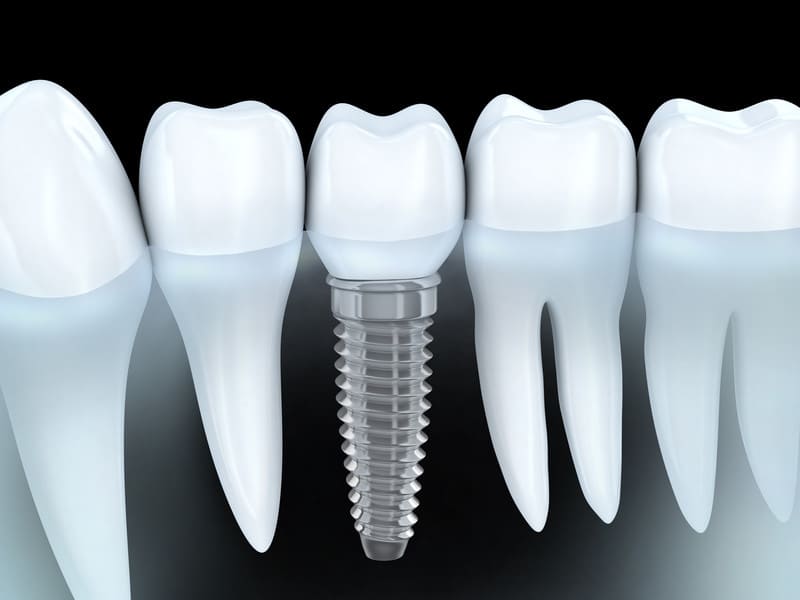
A dental implant is a small titanium post that a dentist places in your jawbone to act as an artificial tooth root. Once the bone fuses with the post — a natural process called osseointegration — the implant can support a crown, a bridge, or even a full arch of new teeth.
Unlike traditional bridges and dentures, which rest on neighboring teeth or gums, implants support themselves. That is why they feel closer to natural teeth, restore stronger chewing power, and are the only tooth-replacement option that helps preserve your jawbone. If you are new to the topic, our guide to dental implants in Naperville covers the basics step by step.
What’s Included in the Cost of Dental Implants?
A trustworthy implant quote covers more than the hardware. At My Tooth Docs, your treatment plan and quote include:
- A consultation with 3D CBCT imaging to plan your treatment precisely
- Extraction of the damaged tooth, if needed — here is what to expect from dental implants after a tooth extraction
- Bone grafting to strengthen the implant site, if needed
- The implant post, abutment, and custom crown
- Sedation options if you want extra comfort during the procedure
Knowing exactly what is included lets you compare quotes accurately and avoid surprise fees. For reference, here is how the individual components typically price out across the U.S.: the implant post runs $1,000 – $3,000, the abutment $400 – $1,000, and the crown $800 – $3,000. That is why a complete package price tells you more than any single line item.
Dental Implant Cost in Naperville by Type
Single Tooth Implant
Replacing one tooth is the most straightforward case. A complete single-tooth implant — post, abutment, and crown — typically costs $3,000 to $6,500 in the Naperville area, depending on whether you need an extraction or bone graft first. Not sure implants are right for you? Start with what makes you a candidate for dental implants.
Implant-Supported Bridge
If you are missing several teeth in a row, one bridge anchored on two implants can replace three or four teeth without placing an implant for each one. Implant-supported bridges typically run $5,000 to $15,000, which often makes them more economical per tooth than individual implants. You can compare this option with traditional dental bridges in Naperville.
Mini Dental Implants
Mini implants are narrower posts that can cost less than standard implants. They suit some smaller teeth and are often used to stabilize dentures — a good option to ask about if you like the idea of snap-on dentures. We will tell you honestly whether you are a candidate.
All-on-4 and Same-Day Full-Arch Implants
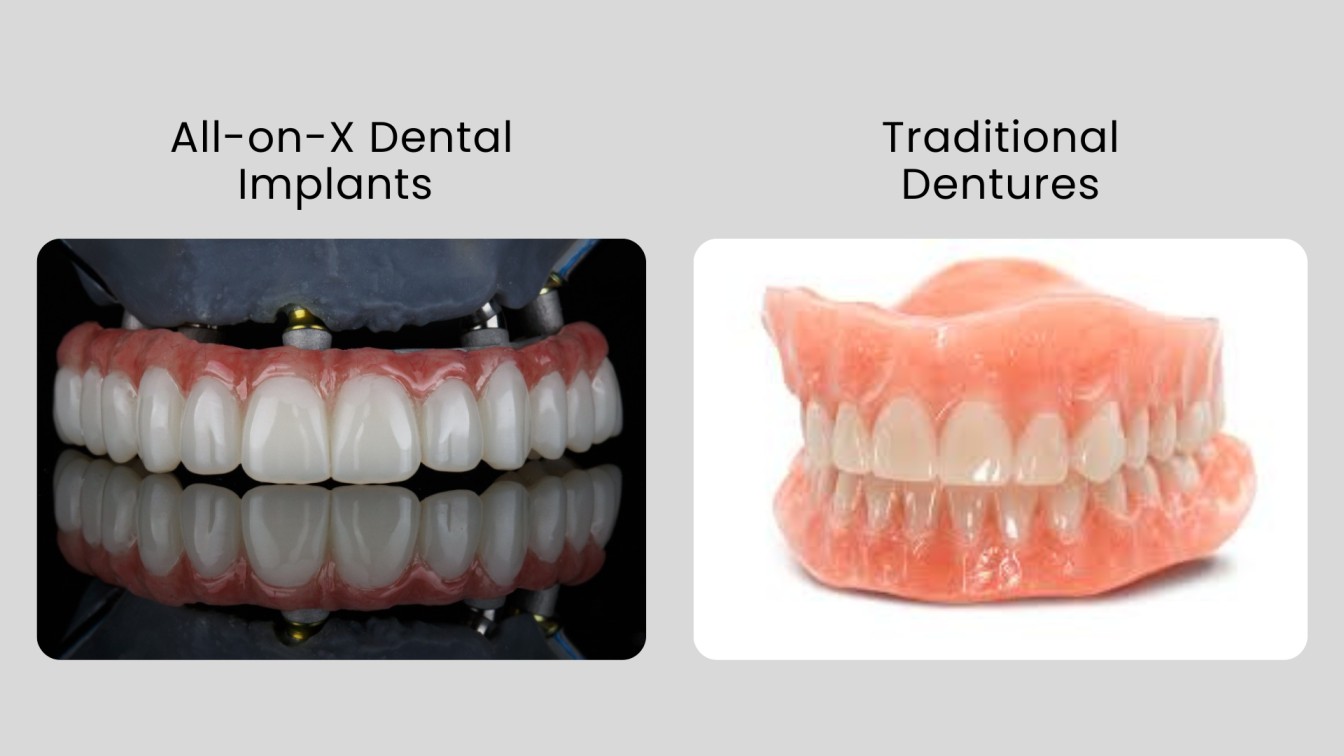
All-on-4 — also called All-on-X full mouth dental implants — uses four to six implants to support an entire arch of fixed teeth. With same-day protocols, many patients leave their placement appointment with a full set of temporary teeth in one visit. Full-arch treatment typically ranges from $15,000 to $30,000+ per arch, and the final bridge material (acrylic vs. zirconia) is one of the biggest price factors.
Full Mouth Dental Implants
Restoring both arches generally costs $30,000 to $60,000+, depending on the number of implants and the materials you choose. That figure buys permanent teeth that look, feel, and function like your own — and for many patients it beats decades of relining, repairing, and replacing dentures. Larger treatment plans are sometimes staged as part of a full mouth reconstruction.
What Affects the Cost of Dental Implants?
Two patients replacing the same tooth can receive very different quotes. The usual reasons:
- Extractions. Removing a failing tooth first typically adds $100 – $650.
- Bone grafting. If bone has receded, grafting adds roughly $500 – $3,000 per site, and a sinus lift for upper back teeth can run $1,500 – $5,000.
- Materials. Zirconia crowns and bridges cost more than acrylic — and wear differently, too.
- Sedation. Comfort options can add cost but make longer visits much easier.
- Imaging and planning. Some offices bill 3D scans separately; at My Tooth Docs, CBCT imaging is part of your implant consultation.
Why Are Dental Implants So Expensive?
The price reflects what goes into the treatment: medical-grade titanium, a custom-made crown, advanced 3D imaging, and the surgical skill to place everything precisely. It also reflects longevity — an implant is designed to serve you for decades. Measured as cost per year, implants often work out cheaper than lower-priced options that need repairing or replacing every several years.
Dental Implant vs. Bridge: Which Costs More?
A traditional bridge costs less upfront, but it typically needs replacing every 10 to 15 years and requires grinding down the healthy neighboring teeth that anchor it. An implant costs more on day one, yet it preserves those neighboring teeth and your jawbone — and it does not need to be redone on a schedule. For many patients, the implant is the better long-term investment; for others, a bridge is the right fit. We will walk you through both options honestly.
Does Insurance Cover Dental Implants in 2026?
Sometimes — and more often than a few years ago. Coverage varies by plan: some policies still exclude implants as elective, while plans that do cover them typically pay 40 – 50% of the cost after your deductible, up to an annual maximum of $1,000 – $2,000. Even when the implant itself is excluded, related procedures — the extraction, bone graft, or crown — are often covered separately.
You may also be able to lower your out-of-pocket cost with:
- A Health Savings Account (HSA) — 2026 contribution limits are $4,400 for individuals and $8,750 for families
- A Flexible Spending Account (FSA) — the 2026 contribution limit is $3,400
- Employer dental benefits that include restorative or major-services coverage
Dental implants are generally an HSA/FSA-eligible expense, and those funds stack with insurance benefits. Not sure what your plan includes? Bring your insurance card to your consultation — our team reviews your benefits, helps you maximize them, and explains financing for any remaining balance.
Dental Implant Financing and Payment Options
You do not have to pay for implants all at once. My Tooth Docs offers flexible monthly payment plans through Cherry financing — a quick application with an instant decision — so treatment fits into a monthly budget instead of a single bill. Many patients are surprised how manageable a fixed new smile can be month to month.
Are Dental Implants Worth the Cost?
For most patients who qualify, yes. Implants protect your jawbone, keep neighboring teeth stable, restore full chewing power, and never come out at night. Because they can last for decades, they often cost less over a lifetime than repeatedly repairing or replacing bridges and dentures. If you want an independent primer before deciding, the American Dental Association’s consumer guide to dental implants is a good place to start.
How to Get an Accurate Implant Quote in Naperville
Online ranges are useful for planning, but every mouth is different. The only way to know your exact cost is a personalized assessment. At My Tooth Docs, your implant consultation is free and includes a 3D CBCT scan, an exam, and a custom treatment plan with clear, upfront pricing — no guesswork, no hidden fees.
Ready to Restore Your Smile?
Don’t let missing teeth hold you back. Book your free implant consultation at My Tooth Docs in Naperville for an exact quote, insurance guidance, and a treatment plan built around your smile.
My Tooth Docs — Naperville: 11258 Illinois Route 59, Unit #1, Naperville, IL 60564 · (630) 690-1406. We also welcome patients at our South Holland and Bourbonnais offices.
Frequently Asked Questions
How much does a single dental implant cost in Naperville?
A complete single-tooth implant — post, abutment, and crown — typically costs $3,000 to $6,500 in the Naperville area. Your exact price depends on whether you need an extraction or bone grafting first.
What is the cost of full mouth dental implants?
Full-arch implant treatment typically runs $15,000 to $30,000+ per arch, so restoring both arches generally costs $30,000 to $60,000+, depending on materials and the number of implants. Monthly financing is available at My Tooth Docs.
Does dental insurance cover implants?
It varies by plan. Policies that cover implants typically pay 40 – 50% after your deductible, up to a $1,000 – $2,000 annual maximum, and related procedures like the extraction or crown are often covered even when the implant post is not. We review your benefits at your consultation.
Can I use an HSA or FSA to pay for dental implants?
Yes — dental implants are generally an eligible expense. For 2026, HSA contribution limits are $4,400 for individuals and $8,750 for families, and the FSA limit is $3,400. HSA and FSA funds can be combined with insurance benefits.
How long do dental implants last?
With good oral hygiene and regular checkups, the implant post itself can last for decades — often a lifetime — while the crown on top typically lasts 10 to 15 years before it needs replacing.
Why do implant quotes vary so much between dentists?
Quotes differ mainly in what they include. Some cover only the implant post, while others bundle the extraction, bone grafting, imaging, sedation, abutment, and crown. Always compare complete treatment plans, not single line items.